
Share Byron Winslow Caughey's obituary with others.
Invite friends and family to read the obituary and add memories.
Stay updated
We'll notify you when service details or new memories are added.
You're now following this obituary
We'll email you when there are updates.
Please select what you would like included for printing:
03,
1957
15,
2026
Byron Winslow Caughey
November 3, 1957 — February 15, 2026
Hamilton
Share Byron Winslow Caughey's obituary with others.
Invite friends and family to read the obituary and add memories.
Stay updated
We'll notify you when service details or new memories are added.
You're now following this obituary
We'll email you when there are updates.
Please select what you would like included for printing:



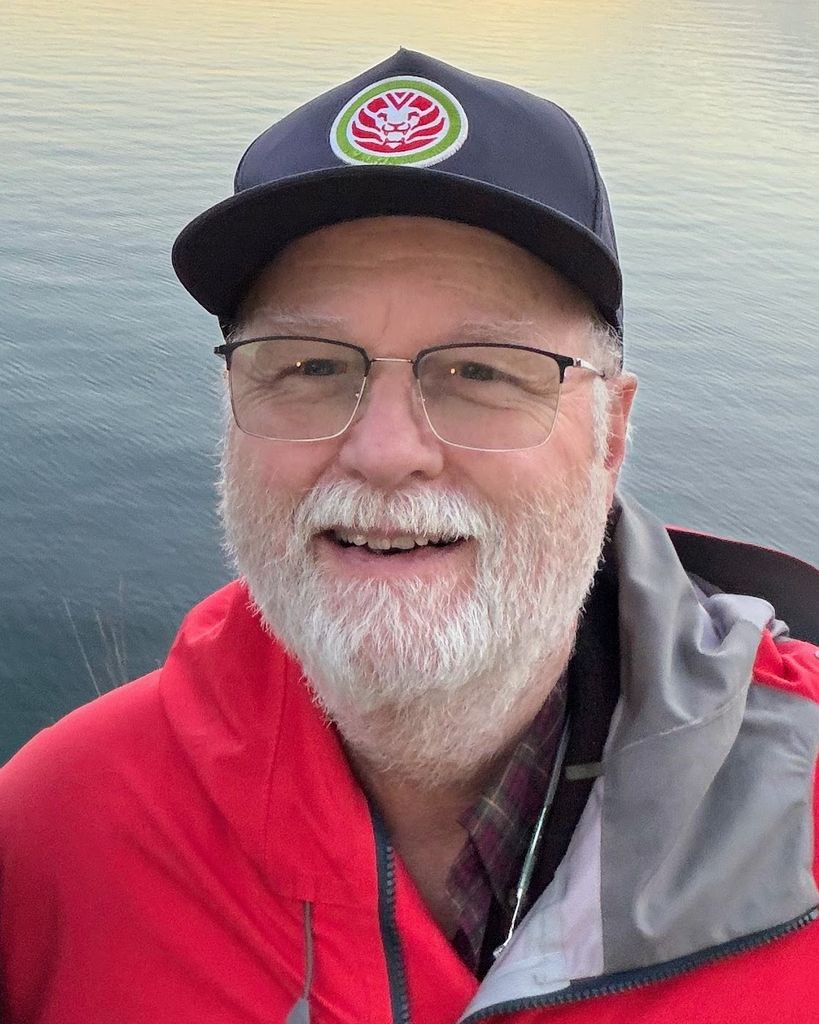
Byron Winslow Caughey, of Hamilton, MT, passed away in his home overlooking the beautiful Bitterroot Mountains on February 15th at the age of 68. He is survived by his wife of 43 years, Pamela; his sons, Kalen (Kelly, grandchildren Willa and Reece) and Evan (Abigail); and his siblings, George, Joan, and Claire.
Byron loved nature, science, art, the song of a bird, and a gentle rain. He appreciated the unusual and unique qualities of everyone he knew and worked with. In his later life, he was completely enamored with and devoted to his two beautiful granddaughters, Willa and Reece, who captured his heart and brought him immense joy.
From an early age, Byron's curiosity and creativity led him on many adventures. According to his older brother, George, he snorkeled every inch of Greg Lake in Antrim, NH, as a child and knew the exact location of the freshwater sponges. He later pursued a career in chemistry at the University of Wisconsin-Madison, where he received his Ph.D., before making substantial contributions to the field of prion research.
Byron built furniture from walnut, created sculptures, was an exceptional artist and wrote poetry throughout his life. He valued craftsmanship, precision, and the process of making something thoughtful and well made.
He was an excellent cook and approached the kitchen with the same curiosity he brought to everything else, experimenting, combining new ingredients, and refining things over time. Willa and Reece especially loved his apple pancakes, something they came to expect whenever they visited.
His kindness, empathy, and care for others touched many, and he will be sorely missed by the multitude who loved him dearly. He was a man who persistently sought the truth and dove deeply to find it.
His dear friend, Dr. Kim Hasenkrug, offers these words about Byron's scientific career:
"Normally, when a scientific investigator is interested in hiring a new scientist, a call will be placed to the candidate's Ph.D. advisor to get a recommendation. When Bruce Chesebro offered Byron a job as a Staff Scientist in 1986, that's not how it went. Instead, Byron's Ph.D. advisor, the famous University of Wisconsin biochemist, Dr. Willy Gibbons, called Bruce. Bruce soon realized that he was the one being interviewed. Willy said Byron was too special to go
anywhere but the best and questioned Bruce extensively. With Willy's blessing, Byron joined Bruce's NIAID/NIH group at Rocky Mountain Labs following two years of postdoctoral training at Duke University. Byron's excellence and insightful productivity propelled him through the ranks to become a tenured Senior Investigator in 1994, and Chief of the TSE/Prion Biochemistry Section in 2006, a Section he ran until his untimely death. It is difficult to describe the enormous impact that Byron left on the scientific community and biomedicine. During his career, Byron authored and co-authored 263 papers on the biology and biochemistry of prion diseases. His publication list is a "Who's Who" of the most prestigious biomedical journals in the world and his seminal papers are of such fundamental import that they have been cited thousands of times by other scientists.
When Byron started to study prions, little was known about these nearly indestructible pathogens that had no detectable genetic material and caused terrible and untreatable neurodegenerative diseases. He developed a sort of protein polymerase chain reaction that could propagate otherwise indetectable levels of this pathogen. Byron and his colleagues advanced this assay into the highly sensitive Real-Time Quaking-Induced Conversion (RT-QuIC) assay that is now used to diagnose Creutzfeldt-Jakob disease (CJD).
Thinking outside the box, he expanded the utility of the assay to the detection of different types of misfolding proteins from diseases such as Parkinson’s disease, Lewy body dementia, Alzheimer’s and Pick disease by testing diagnostically relevant specimens such as cerebrospinal fluid and skin biopsies. Scientists came from all over the world to learn how to perform the RT-QuIC assay in Byron’s lab and apply this knowledge to expanding the number of diseases that could be diagnosed by the RT-QuIC assay.
Knowing that understanding the 3-dimensional structure of prions would provide critical information for the development of therapeutics, Byron (and many others) spent decades working on the intractable problem of solving the crystal structure of a misbehaving protein that would not form crystals. In 2021, Byron and his colleagues used cryo-EM to finally elucidate the first high resolution structure of a prion, a structure very similar to one he had conceptualized years earlier, by bending foam covered metal wires into spaghetti-like shapes covered in post-it note labels. He would approach this work in his recliner, where the first step would be to put on his signature magnetic ‘snap on’ bifocal glasses that were always at the ready hanging from his neck.
Byron received numerous national and international recognition honors, was awarded 5 US patents, brought over 1.3 million dollars of outside research money into the lab, organized a dozen international meetings, worked tirelessly as an editor and editorial board member for numerous scientific journals, reviewed way too many grant applications, served on a multitude of committees, and trained dozens of Ph.D. students and post-docs, many of whom now run their own labs. Scientists came from all over the world to learn how to perform the RT-QuIC assay in Byron's lab. He was a highly sought-after speaker at conferences around the world, and when Byron got up to speak, a hush fell over the audience. They knew something interesting and exciting was about to unfold. It may seem hard to fathom how he could get so much done, but Byron had a secret. He didn't sleep. At least not like a normal human. He catnapped for a couple hours and then went back to work. Most people will never realize how much his work touches our lives, but those who were fortunate to work with him will never forget."
In lieu of flowers, Byron’s wishes were for donations to the Bitterroot Land Trust or the Nature Conservancy.
Byron will be remembered with an intimate family memorial where his ashes will be spread in the ocean, as was his wish. A memorial gathering for the public will be held at a later date in the spring or summer and will be announced. Condolences may be left for the family at www.dalyleachchapel.com.
To order memorial trees or send flowers to the family in memory of Byron Winslow Caughey, please visit our flower store.
Guestbook
Visits: 503
This site is protected by reCAPTCHA and the
Google Privacy Policy and Terms of Service apply.
Service map data © OpenStreetMap contributors